
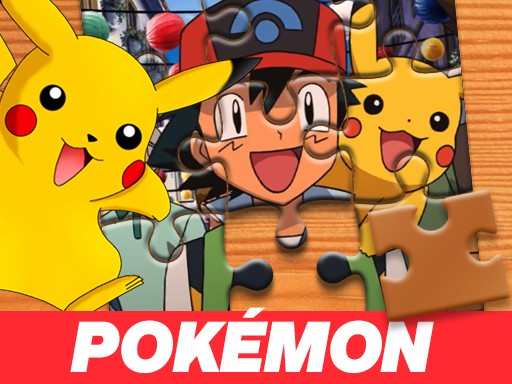
Pokemon Jigsaw Puzzle Game
What players say
Pokemon Jigsaw Puzzle Game delivers exactly what its name suggests: scattered pieces, a transparent outline, and no pressure. The three difficulty levels adjust piece count only, so the challenge comes from visual scanning and patience rather than speed or risk. Bright, non-violent artwork and touchscreen-friendly controls make it accessible to children and adults alike. The main limitation is that it offers no scoring, progression, or competitive layer—players looking for rewards or timed challenges will not find them here. As a quiet break activity or a low-stakes family puzzle, it fits its stated purpose well.
About
What You Actually Do
Each session starts with a difficulty choice that sets how many pieces appear on screen. Once you pick, the pieces scatter and a transparent outline of the final Pokemon picture stays visible underneath. You click or tap any piece, drag it over the outline, and release. If the spot matches, the piece locks in place; if not, it stays free for another attempt. The round ends when every piece is matched and the full image is revealed. [IMG_1]
Difficulty Without Pressure
Three difficulty levels change only the piece count: easy uses fewer pieces, medium adds a moderate amount, and hard increases the total for players who want a longer session. There is no timer, no move counter, and no score penalty, so difficulty affects patience and visual scanning rather than risk or speed. That design keeps the game open to young children and adults who want a low-stakes activity during a short break or a longer sitting. [IMG_2]
Controls and Accessibility
The drag-and-drop system works the same way on desktop and touchscreen devices. Because the transparent outline shows the target image, players do not need to memorize the picture or guess placement. The interface stays minimal: pieces, outline, and the puzzle itself. Bright, non-violent Pokemon artwork keeps the tone cheerful and family-friendly, and each puzzle uses a different picture to add variety between sessions. [IMG_3]
A Practical Approach to Solving
Starting on easy helps you get used to the drag-and-drop feel before the piece count grows. The transparent outline is the main guide—use it to match shapes and colors rather than trying random spots. Edge pieces and pieces with distinct colors or patterns give you a foundation to build from. If you feel stuck, stepping away for a few minutes often makes the next piece easier to spot. Regular play naturally improves pattern recognition, but the game never demands speed.
Compatibility
FAQ
Comments
Sign in to comment
You must be logged in before posting a review or rating.
No comments yet. Be the first to comment!











Editorial Notes