
Slide Puzzle: Logic Challenge
What players say
Slide Puzzle: Logic Challenge delivers a focused sliding-block experience: move orange blocks onto targets, working around walls and other blocks. The absence of timers makes it approachable for casual players, while later levels add obstacles and multiple blocks to satisfy logic-puzzle fans. The main limitation is that the core mechanic stays the same throughout, so players seeking varied puzzle types may find it repetitive.
About
Block-Sliding Basics
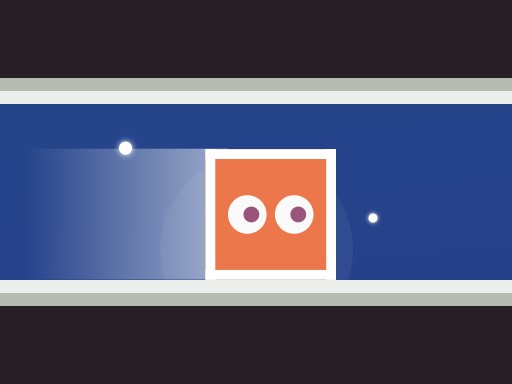
Each level presents orange blocks and matching target spots on a grid. You click a block and drag in a direction; it keeps moving until it hits a wall or another block. The puzzle ends when every orange block sits on its target. Because blocks can block each other, the order of moves often decides whether a solution exists.
Planning Over Reflexes
There are no timers or score penalties, so you can study the board before acting. The challenge comes from sequencing: moving one block might open a path for another, or it might trap a block against a wall. Levels add obstacles and more blocks, which increases the number of possible interactions without changing the basic rule set.
Controls and Accessibility
Select a block by clicking or tapping it, then drag in the direction you want it to slide. The same block can be redirected after it stops, or you can switch to a different block. The input method works the same on desktop and touch devices, and the game avoids time pressure, making it suitable for players who prefer thinking to reacting.
Difficulty Curve and Level Variety
Early boards use few blocks and open space, so solutions are easy to spot. Later layouts introduce obstacles and multiple blocks that must be coordinated. Each level has a unique arrangement, which keeps the puzzle from feeling like a repeated pattern. The gradual increase means new players can learn the rules without a tutorial-heavy introduction.
Compatibility
FAQ
Comments
Sign in to comment
You must be logged in before posting a review or rating.
No comments yet. Be the first to comment!











Editorial Notes