
Number Tile Strategy Challenge
What players say
Number Tile Strategy Challenge offers a balanced mix of luck and skill. The straightforward rules make it accessible, while tile counting and probability estimation provide depth for experienced players. Observing discards adds a deduction layer that rewards memory and foresight. The game's replayability stems from random tile distribution and player decisions. Suitable for those who enjoy logic puzzles and strategic tile placement, though the lack of specified player count may require checking official rules.
About
Core Tile Mechanics
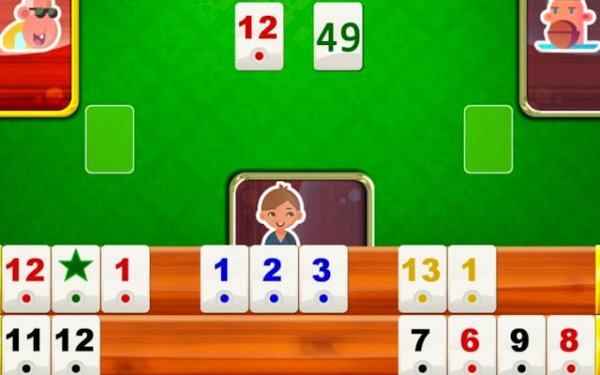
Number Tile Strategy Challenge centers on arranging numbered tiles into specific patterns. Players draw tiles from a shared pool and must decide which to keep and which to discard. The goal is to form sets of identical numbers across different colors, sequences of consecutive numbers in the same color, or seven distinct pairs. This system creates a constant tension between building your own hand and blocking opponents by observing their discards. Every discard provides clues about what other players are collecting.
Strategic Decision Making
Success depends on reading the flow of the game. Skilled participants learn to balance holding versatile tiles against committing to a specific strategy early. The game rewards those who can adapt when their planned combinations become unlikely. This layer of deduction turns each session into a test of both memory and foresight. Beginners can focus on forming simple sets, while experienced players develop complex strategies involving tile counting and probability estimation.
Accessibility and Depth
The rules are straightforward enough for newcomers to grasp quickly, but mastering the game takes considerable practice. This range of difficulty ensures that players of different skill levels can enjoy the game together. The game may include multiple tile designs and color schemes to keep the experience fresh. Different visual themes can change the look of the tiles without altering the core mechanics.
Replayability and Longevity
Because each game depends on the random distribution of tiles and the decisions of all participants, no two matches are alike. The combination of chance and strategy means that even after dozens of plays, new situations arise. This unpredictability gives the game lasting appeal for those who enjoy solving fresh puzzles repeatedly.
Compatibility
FAQ
Comments
Sign in to comment
You must be logged in before posting a review or rating.
No comments yet. Be the first to comment!










Editorial Notes