
Shape Shift Dash Runner
What players say
Shape Shift Dash Runner stands out in the crowded casual runner space by tying progress to form selection rather than jump timing alone. Each obstacle type maps to a specific shape ability, so runs become small planning exercises: read the track, transform early, keep pace. The tap-or-click controls and colorful course variety support quick sessions, while the mix of terrain gives repeat runs a reason to exist. The main limitation visible in the source is that depth depends on how many distinct forms and obstacle types the game actually includes. Players who want pure reflex running may find the transformation layer slows the pace they prefer.
About
Form-Switching as the Core Mechanic
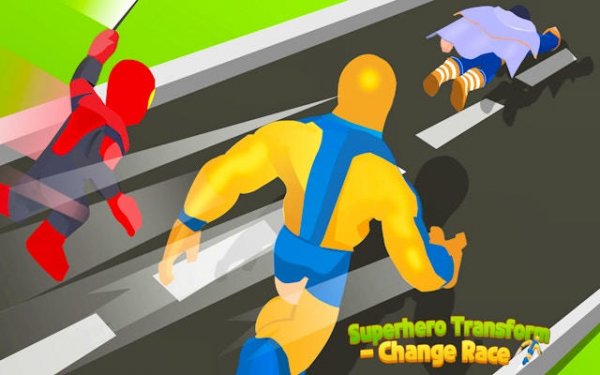
Shape Shift Dash Runner builds its action around a single decision: which form to use and when. Your character runs through obstacle courses, and each form carries a distinct ability tied to a specific obstacle type. One form might climb high walls; another might glide across water. The challenge is not raw speed alone but reading the track and transforming before the obstacle forces a slow-down.
How Obstacle Courses Shape the Run
Tracks are colorful and varied, with terrain segments that reward different forms. A wall segment calls for a climbing form, while a water stretch calls for a swimming or gliding form. Because these segments are mixed within a single run, players who learn a track's layout can plan transformations in advance rather than reacting late. That planning is what turns a simple runner into a light strategic puzzle.
Controls and Timing
Controls are built for quick sessions: tap or click to run and jump, watch the track ahead, and tap a transformation button when an obstacle appears. Using the correct form keeps your pace and saves time. Mistiming a transformation or choosing the wrong hero slows progress. Practice is the main way to learn each form's strengths and internalize the timing.
Strategy and Replay Value
The transformation system adds a layer of decision-making beyond typical arcade runners. You weigh the immediate obstacle against what comes next, since a form that clears one segment may be a poor fit for the following one. A roster of hero forms with unique movement powers supports this, and the mix of terrain types encourages repeated runs to refine route and transformation choices.
✅ Compatibility & Testing
FAQ
Comments
Sign in to comment
You must be logged in before posting a review or rating.
No comments yet. Be the first to comment!










Editorial Notes