
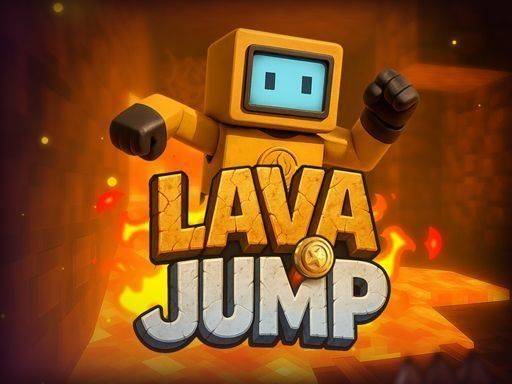
Flame Vault Runner
What players say
Flame Vault Runner succeeds by focusing on one core mechanic and refining it across dozens of rooms. The rising heat creates constant pressure without feeling cheap, and the token system adds a rewarding layer of optional challenge. The clean visuals and responsive controls make every jump feel fair. Players who enjoy precision-based games will find plenty to appreciate here.
About
Core Movement and Timing
Flame Vault Runner centers on a simple but demanding mechanic: players tap or click to make their character jump. Success depends on landing on surfaces that shift or bounce. The heat below rises steadily, so hesitation or mistimed leaps can end a run. Each room presents a fresh arrangement of platforms, forcing players to adapt quickly. The game does not rely on complex controls, which makes it easy to pick up. However, mastering the rhythm of each stage requires practice and patience. The challenge lies in reading the environment and committing to a path without second-guessing.
Stage Design and Obstacles
Rooms in Flame Vault Runner are built around a few key elements: moving blocks, bouncing pads, and stationary hazards. Moving blocks travel on fixed paths, and players must predict their positions to land safely. Bouncing pads launch the character higher, which can help reach distant platforms or skip dangerous sections. Stationary hazards, such as sharp points, block certain routes and force players to find alternate paths. Later stages combine these elements in tighter spaces, demanding faster reactions. The design encourages players to study each room before moving, as rushing often leads to failure.
Token Collection and Character Options
Scattered throughout each room are tokens that players can gather. These tokens serve as a currency to unlock new characters. Each character may offer a different visual style, but the core gameplay remains the same. Collecting tokens adds a layer of optional challenge, as some are placed in risky positions that require extra precision to reach. Players who focus on token gathering often need to replay stages to learn the safest routes. This system gives the game replay value without forcing players to grind. Unlocking characters is a satisfying reward for those who explore each room thoroughly.
Progression and Difficulty Curve
The game gradually increases its difficulty by introducing new platform patterns and faster sequences. Early stages serve as a tutorial, teaching the basics of jumping and landing. Mid-game levels add moving blocks and bouncing pads, requiring players to chain jumps together. Late-game rooms combine all elements with tighter margins for error. The difficulty curve feels natural, as each new mechanic is introduced in a controlled setting before being used in more complex layouts. Players who struggle can replay earlier stages to build muscle memory. The game never feels unfair, as failures are usually the result of a mistimed jump rather than a random event.
Visual and Audio Atmosphere
Flame Vault Runner uses a clean visual style that keeps the focus on gameplay. Rooms are brightly lit, and platforms are clearly distinguishable from hazards. The rising heat is shown as a glowing orange line that climbs steadily, giving players a clear visual cue of their remaining time. Sound effects accompany jumps, landings, and token collection, providing audio feedback that helps players gauge their actions. The music is upbeat but not distracting, matching the fast pace of the game. Overall, the presentation supports the gameplay without overwhelming the player.








Comments
Sign in to comment
You must be logged in before posting a review or rating.
No account? Create one
No comments yet. Be the first to comment!