
Number Grid Equation Builder
What players say
Number Grid Equation Builder succeeds by making arithmetic feel like a puzzle rather than a drill. The block-pushing mechanic adds a satisfying spatial challenge that rewards careful planning. Progressive difficulty keeps the experience fresh, and the lack of a timer reduces stress. It is a solid choice for families or educators looking for a gentle, educational game.
About
Grid Navigation & Block Placement
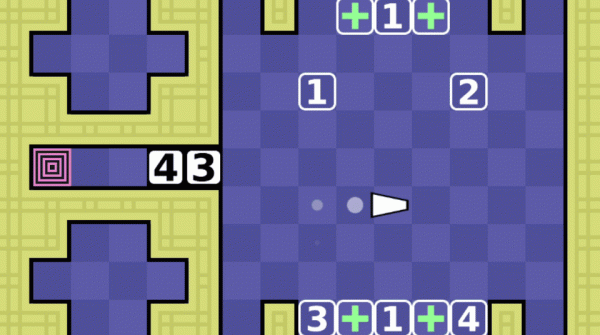
Players move a small character around a square board using directional keys or on-screen controls. The board contains scattered number tiles and operator tiles showing plus and minus signs. The goal is to push these tiles into a straight line so they form a complete equation that equals the number displayed at the top of the screen. For instance, if the target is 15, a player might arrange tiles reading 9, +, and 6. Once the equation is correct, a portal opens, allowing the character to advance.
Progressive Puzzle Complexity
Early levels present small numbers and single-step equations, making them accessible to younger players or those new to the concept. As the player progresses, the grid expands and larger numbers appear. Later stages may require two operators, such as 20 - 5 + 3. The gradual increase in difficulty ensures that players build confidence before encountering more demanding arrangements. No time pressure exists, so each puzzle can be approached at a comfortable pace.
Strategic Thinking & Trial Methods
Because blocks can only be pushed in straight lines and cannot be pulled, players must plan their moves carefully. Sometimes a tile ends up in a corner or against a wall, requiring the player to reposition other blocks first. This spatial constraint adds a layer of strategy beyond simple arithmetic. Experimenting with different tile orders and testing which combinations yield the target number is a natural part of the learning process. Over time, players develop both number sense and efficient movement patterns.
Visual Design & User Experience
The interface uses clean, flat graphics with clearly legible numbers and symbols. Each tile is color-coded: number blocks in one shade, plus signs in another, and minus signs in a third. The target number is displayed prominently at the top, and a counter shows the current level. The layout avoids unnecessary animations or pop-ups, keeping the focus on the puzzle itself. Sound effects are minimal, providing gentle feedback when a correct equation is formed.
Family-Friendly Educational Value
This game naturally reinforces mental arithmetic through repeated practice. Players must compute sums and differences quickly to identify which blocks are useful. Because the puzzles require both calculation and physical manipulation, the game engages multiple cognitive skills simultaneously. Parents and teachers may find it a useful tool for making math practice feel more like play. The absence of violent content or competitive pressure makes it suitable for children and adults alike.
Comments
Sign in to comment
You must be logged in before posting a review or rating.
No account? Create one
No comments yet. Be the first to comment!