
Orbit Sprint Track Runner
What players say
Orbit Sprint Track Runner works best for players who enjoy short, repeatable reflex challenges. The rotating circular tracks keep the field in motion, and the orb-to-shield system adds a small strategic layer beyond pure reaction. Difficulty rises gradually, so improvement feels earned rather than sudden. The main limitation is scope: there is no level variety or narrative, only the run itself. That narrow focus is a strength for score chasers and a drawback for anyone wanting more structure.
About
Rotating Track Foundations
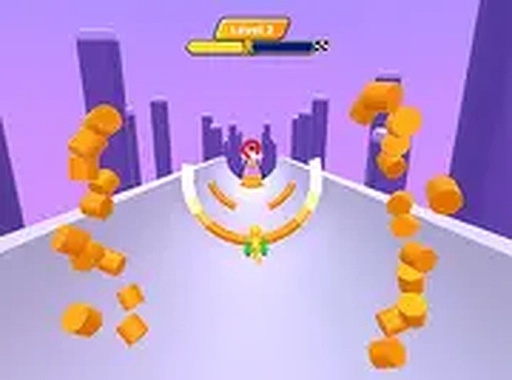
The playing field in Orbit Sprint Track Runner is built from circular paths that rotate without pause. That constant motion changes the angle and speed of your approach, so the track itself becomes an active part of the challenge rather than a static background. You guide your character along these moving rings, and as a run continues, the rotation speed climbs. The result is a game that asks for continuous small adjustments, not just one-time memorization of a layout.
Energy Orbs and the Shield Meter
Energy orbs sit along the track, and moving your character over one collects it. Each pickup fills an on-screen meter. When that meter reaches its maximum, a temporary shield becomes available. Activating the shield lets your character pass through obstacles without being stopped, creating a short window of invulnerability. Because the shield is limited, the decision of when to trigger it matters most during dense obstacle sections where a single mistake ends the run.
Obstacle Timing and Jump-Slide Decisions
Barriers appear at varying intervals and in different patterns. Low obstacles require a jump, high ones require a slide, and moving obstacles demand precise timing rather than a fixed reaction. As the game speed increases, these patterns grow more complex, so you must anticipate what is coming instead of reacting only after it appears. The jump-slide choice is the core moment-to-moment decision, and misreading an obstacle type is the most common way a run ends.
Progression and Session Length
A run starts at a moderate pace, giving you time to learn the controls and how the track behaves. Collecting more orbs and traveling further raises the rotation speed and makes obstacles appear more frequently. This gradual ramp-up rewards players who improve their reflexes and pattern recognition over time. Each attempt lasts only a few minutes, which suits short breaks, while the pursuit of higher scores encourages repeated runs for players who want to invest more time.
Compatibility
FAQ
Comments
Sign in to comment
You must be logged in before posting a review or rating.
No comments yet. Be the first to comment!






Editorial Notes