
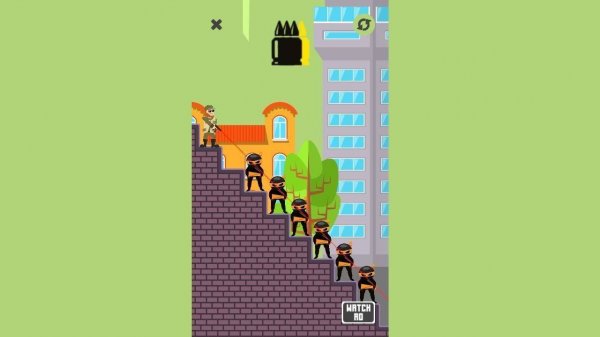
Thoughtful Tile Challenges
What players say
Thoughtful Tile Challenges delivers a focused puzzle experience built around ordered interactions on static boards. Its strengths are a gentle learning curve, clear visual design, and immediate feedback that turns mistakes into learning opportunities. The absence of time limits makes it suitable for relaxed play across age groups. The main limitation is that it offers no competitive or timed modes, so players seeking fast-paced challenges may find it too slow. It is best suited to those who enjoy pattern recognition and sequential reasoning.
About
Ordered Interactions, Not Reactions
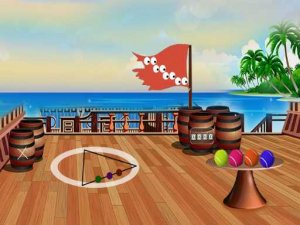
Every puzzle in Thoughtful Tile Challenges presents a fixed arrangement of objects. Your job is to work out which items to select and in what order. Clicking or tapping the wrong element produces an immediate, visible result, so each decision carries weight. Because nothing moves on a timer, you can study the layout before committing to a move. The game treats mistakes as information rather than failure, which keeps the focus on reasoning instead of reflexes.
How the Difficulty Grows
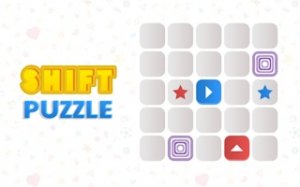
Early puzzles establish simple interaction patterns—matching or sorting items, for example—so the basic language of the game is clear before anything complicated appears. Later stages combine those fundamentals into longer sequences that require planning several steps ahead. The mix of puzzle types shifts often enough that consecutive levels rarely feel like copies of each other. Players who enjoy pattern recognition and spatial reasoning will find the progression steady rather than sudden.
Reading the Board at a Glance
The visual design supports the puzzle logic directly. Icons and objects are drawn with clear distinctions, so there is little ambiguity about what can be selected. Menus are minimal and animations are kept out of the way, which matters when a puzzle depends on noticing small differences between elements. Since the game runs entirely in a web browser, it works on desktop, tablet, and phone without installation. Mouse clicks and touch taps are the only inputs needed.
Feedback and Self-Guided Learning
After each attempt, the game shows whether the chosen action was correct or whether a different approach is needed. That feedback loop lets players adjust their strategy without external hints. There is no penalty for wrong moves, so experimentation stays low-pressure. Newcomers can grasp the core idea within the first few puzzles, while experienced solvers will find later stages demanding enough to hold attention. The overall tone is calm and methodical, suitable for family play or solo sessions.
Compatibility
FAQ
Comments
Sign in to comment
You must be logged in before posting a review or rating.
No comments yet. Be the first to comment!









Editorial Notes