
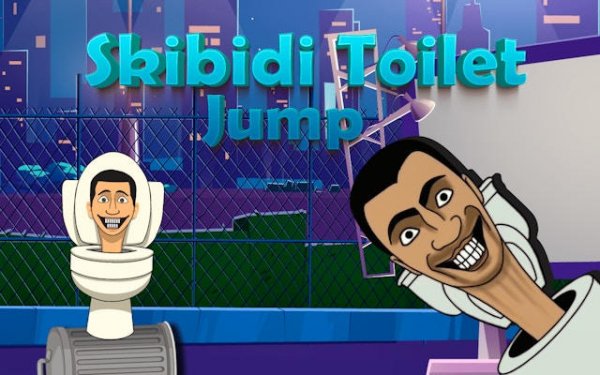
Tower Stacking Arcade Game
What players say
Tower Stacking Arcade Game delivers a focused arcade experience built around one mechanic: timing a jump to land on the next object. The one-tap control and browser-based format make it immediately accessible, while the progressive difficulty as the tower grows keeps it from feeling trivial. The comical physics and colorful presentation suit a family-friendly audience. Its main limitation is that the core loop is intentionally narrow, so players seeking varied mechanics may find it repetitive over long sessions.
About
The Jump-and-Stack Loop
Every run in Tower Stacking Arcade Game follows the same simple loop: a character stands on the ground or on the last object placed, and the player taps or clicks to make it jump onto the next object in the stack. The twist is that the jump must be timed precisely. Tap too early or too late and the character misses the target, causing the tower to wobble and possibly collapse. The run ends when the stack falls, and the score reflects how many objects were successfully stacked before that happens.
Why Timing Beats Button Mashing
Because the only input is a single tap or click, success depends entirely on rhythm and observation. Rushing rarely helps; instead, players who watch the movement pattern before tapping tend to land more jumps. The difficulty rises naturally as the tower grows taller, since a higher stack leaves less room for error. That progression keeps early stacks approachable while making later jumps feel genuinely demanding.
Presentation and Accessibility
The game uses comical physics and colorful graphics to keep the mood light. There is no inappropriate content, and the one-tap control scheme means players of any age can pick it up without instructions. It runs directly in a web browser with no download required, which makes it easy to start a session during a short break or extend one when a run is going well.
Approaching a High Score
Consistency matters more than speed. Building a steady pace through the early stacks helps establish a rhythm that carries into the harder later jumps. After a miss, treating the next attempt as a fresh start is more productive than trying to force a recovery. Players who practice regularly tend to develop a more reliable sense of when to tap. [IMG_1]
Compatibility
FAQ
Comments
Sign in to comment
You must be logged in before posting a review or rating.
No comments yet. Be the first to comment!








Editorial Notes